
Ritual Murder of the Russian Imperial Family
 |

Large numbers of people marched near the Russian city of Yekaterinburg before dawn on July 17 to mark the 99th anniversary of the killing by Bolsheviks of Tsar Nicholas II and his family. Marchers carried Russian Orthodox icons and crosses in the procession from the site where Tsar Nicholas II, Tsarina Aleksandra, and their five children were killed in 1918 — months after the Bolsheviks seized power — to the spot where their bodies were buried.  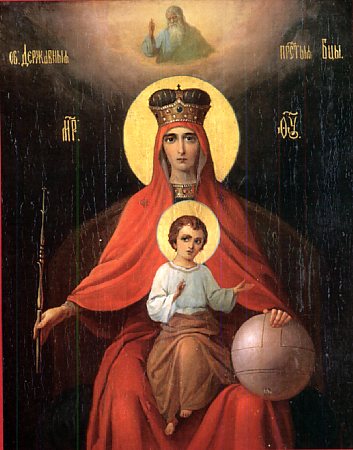 In 2000, the Russian Orthodox Church canonized Nicholas, Aleksandra, Crown Prince Aleksei, and Grand Princesses Olga, Tatiana, Maria, and Anastasia.A procession honoring the royal family has been held in Yekaterinburg each July 17 since then. In 2000, the Russian Orthodox Church canonized Nicholas, Aleksandra, Crown Prince Aleksei, and Grand Princesses Olga, Tatiana, Maria, and Anastasia.A procession honoring the royal family has been held in Yekaterinburg each July 17 since then.Russian news agencies said tens of thousands of people marched this year. They included Natalya Poklonskaya — a controversial lawmaker who has aired monarchist views — as well as Romanov relative Olga Kulikovskaya-Romanova and delegations from Kazakhstan, Uzbekistan, and New Zealand. Special services and prayers commemorating the last tsar and his family were held in Orthodox Churches in St. Petersburg, Moscow, and other Russian cities. A substantial majority of Russians consider themselves Orthodox Christians, but surveys show that only a small fraction attend church regularly. [Source: World Tribune] |
